
- Show All
- AUTO RECONDITIONING MACHINES
- AXLE STANDS
- BATTERY CHARGERS
- ENGINE STANDS
- GREASE & OILS
- HYDRAULIC BODY JACKS
- HYDRAULIC BOTTLE JACKS
- HYDRAULIC TOE JACKS
- HYDRAULIC TROLLEY JACKS
- HYD ENGINE CRANES
- HYD MOTORCYCLE LIFT
- HYD TRANSMISSION JACKS
- HYD SPRING COMPRESSOR
- HYD VEHICLE POSITIONING JACK
- GARAGE ESSENTIALS
- OIL DRAIN TANK
- PANEL BEATING EQUIPMENT
- WORKSHOP PRESSES
Bandsaw Blades-Metal
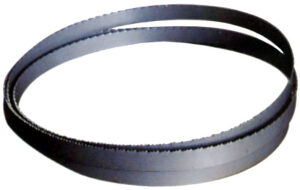
BANDSAW BLADE: 2940 X 6MM X 6TPI CB (WOOD)
SKU:
BSB700420
* Carbon blades are the economical choice for general purpose and utility sawing operations.
* These blades cut a wide variety of materials from carbon steels and aluminum to abrasive materials like fiberglass and wood
* For Metal: Bandsaw blades normally get dull from use, but some precautions will give you longer than normal wear on the blades. Blades will dull quickly if used at too rapid a speed for the metal being cut. Also, if the metal to be cut is too hard for the pitch of the blade, you will experience abnormal wear
* The most common cause of premature blade wear comes from using too fine a pitch blade and from feeding the blade too heavy
* For Wood: Proper tracking of the blade is crucial to accurate cutting and considerably reduces blade breakage. The first step to ensuring good tracking is to check that the two band wheels are co-planar. This can be done by placing a straightedge across the front of the wheels and adjusting until each wheel touches. Rotate the wheels with the blade in position and properly tensioned and check that the tracking is correct. Now install the blade guide rollers and leave a gap of about 1 mm between the back of the blade and the guide flange. The teeth of blades that have become narrow through repeated sharpening will foul the front edge of the guide rollers due to their kerf set and force the blade out of alignment. This can be remedied by cutting of a small step on the rollers' front edges to accommodate the protruding teeth. Ideally the rollers should be crowned, a configuration that assists in the proper tracking of bands and belts, at the same time allowing clearance for the set of the teeth
* Carbon blades are more flexible than bi-metal and suit contour work in wood *
BANDSAW BLADE: 2940 X 16MM X 6TPI CB (WOOD)
SKU:
BSB700480
*Carbon blades are the economical choice for general purpose and utility sawing operations.
* These blades cut a wide variety of materials from carbon steels and aluminum to abrasive materials like fiberglass and wood
* For Metal: Bandsaw blades normally get dull from use, but some precautions will give you longer than normal wear on the blades. Blades will dull quickly if used at too rapid a speed for the metal being cut. Also, if the metal to be cut is too hard for the pitch of the blade, you will experience abnormal wear
* The most common cause of premature blade wear comes from using too fine a pitch blade and from feeding the blade too heavy
* For Wood: Proper tracking of the blade is crucial to accurate cutting and considerably reduces blade breakage. The first step to ensuring good tracking is to check that the two band wheels are co-planar. This can be done by placing a straightedge across the front of the wheels and adjusting until each wheel touches. Rotate the wheels with the blade in position and properly tensioned and check that the tracking is correct. Now install the blade guide rollers and leave a gap of about 1 mm between the back of the blade and the guide flange. The teeth of blades that have become narrow through repeated sharpening will foul the front edge of the guide rollers due to their kerf set and force the blade out of alignment. This can be remedied by cutting of a small step on the rollers' front edges to accommodate the protruding teeth. Ideally the rollers should be crowned, a configuration that assists in the proper tracking of bands and belts, at the same time allowing clearance for the set of the teeth
* Carbon blades are more flexible than bi-metal and suit contour work in wood *area) *
BANDSAW BLADE: 3607 X 25MM 14TPI BI-METAL
SKU:
BSB700483
* Bandsaws and reciprocating saw blades are often made with bimetal construction
* The teeth, made of high speed steel, are bonded (by various methods, for example, electron beam welding or laser beam welding) to the high-strength carbon steel base
* Such construction makes for blades with a better combination of cutting speed and durability than shown by non-bimetal blades, because the advantages and disadvantages of each of the metals are applied in the best locations: the teeth are harder (and thus cut better), but therefore also brittler; meanwhile, the body area of the band is softer (which would make for poorer teeth), but also less brittle, and thus more resistant to cracking and breaking (which is desirable in the body area) *
BANDSAW BLADE: 3607 X 25MM 10TPI CARBON
SKU:
BSB700484
* Carbon blades are the economical choice for general purpose and utility sawing operations.
* These blades cut a wide variety of materials from carbon steels and aluminum to abrasive materials like fiberglass and wood
* For Metal: Bandsaw blades normally get dull from use, but some precautions will give you longer than normal wear on the blades. Blades will dull quickly if used at too rapid a speed for the metal being cut. Also, if the metal to be cut is too hard for the pitch of the blade, you will experience abnormal wear
* The most common cause of premature blade wear comes from using too fine a pitch blade and from feeding the blade too heavy
* For Wood: Proper tracking of the blade is crucial to accurate cutting and considerably reduces blade breakage. The first step to ensuring good tracking is to check that the two band wheels are co-planar. This can be done by placing a straightedge across the front of the wheels and adjusting until each wheel touches. Rotate the wheels with the blade in position and properly tensioned and check that the tracking is correct. Now install the blade guide rollers and leave a gap of about 1 mm between the back of the blade and the guide flange. The teeth of blades that have become narrow through repeated sharpening will foul the front edge of the guide rollers due to their kerf set and force the blade out of alignment. This can be remedied by cutting of a small step on the rollers' front edges to accommodate the protruding teeth. Ideally the rollers should be crowned, a configuration that assists in the proper tracking of bands and belts, at the same time allowing clearance for the set of the teeth
* Carbon blades are more flexible than bi-metal and suit contour work in wood *
BANDSAW BLADE: 3340 X 13mm 4TPI CARBON WOOD
SKU:
BSB700486
* Carbon blades are the economical choice for general purpose and utility sawing operations.
* These blades cut a wide variety of materials from carbon steels and aluminum to abrasive materials like fiberglass and wood
* For Metal: Bandsaw blades normally get dull from use, but some precautions will give you longer than normal wear on the blades. Blades will dull quickly if used at too rapid a speed for the metal being cut. Also, if the metal to be cut is too hard for the pitch of the blade, you will experience abnormal wear
* The most common cause of premature blade wear comes from using too fine a pitch blade and from feeding the blade too heavy
* For Wood: Proper tracking of the blade is crucial to accurate cutting and considerably reduces blade breakage. The first step to ensuring good tracking is to check that the two band wheels are co-planar. This can be done by placing a straightedge across the front of the wheels and adjusting until each wheel touches. Rotate the wheels with the blade in position and properly tensioned and check that the tracking is correct. Now install the blade guide rollers and leave a gap of about 1 mm between the back of the blade and the guide flange. The teeth of blades that have become narrow through repeated sharpening will foul the front edge of the guide rollers due to their kerf set and force the blade out of alignment. This can be remedied by cutting of a small step on the rollers' front edges to accommodate the protruding teeth. Ideally the rollers should be crowned, a configuration that assists in the proper tracking of bands and belts, at the same time allowing clearance for the set of the teeth
* Carbon blades are more flexible than bi-metal and suit contour work in wood *dsaw *
BANDSAW BLADE: 4070 X 13MM 10/14 BI-METAL
SKU:
BSB700550
* Bandsaws and reciprocating saw blades are often made with bimetal construction
* The teeth, made of high speed steel, are bonded (by various methods, for example, electron beam welding or laser beam welding) to the high-strength carbon steel base
* Such construction makes for blades with a better combination of cutting speed and durability than shown by non-bimetal blades, because the advantages and disadvantages of each of the metals are applied in the best locations: the teeth are harder (and thus cut better), but therefore also brittler; meanwhile, the body area of the band is softer (which would make for poorer teeth), but also less brittle, and thus more resistant to cracking and breaking (which is desirable in the body area) *
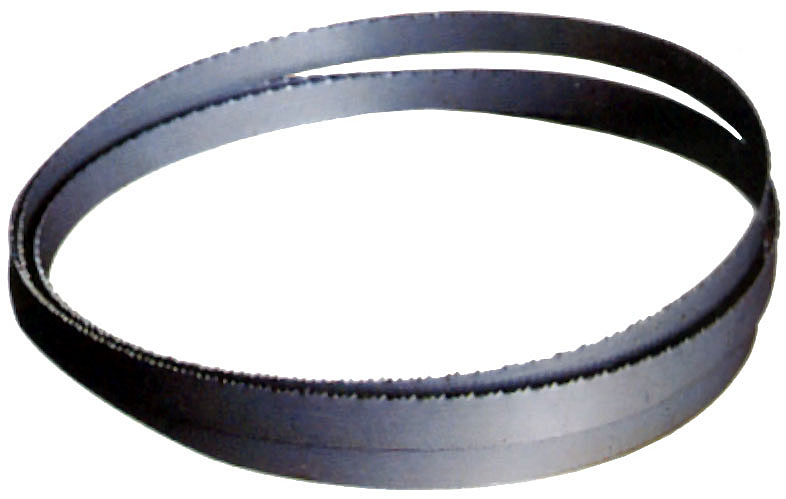
BANDSAW BLADE: 2660 x 13 x 4TPI CARBON Wood
SKU:
BSB800100
BANDSAW BLADE: 2180 X 19 X 14TPI BI METAL
SKU:
BSB800104

BANDSAW BLADE: 2200 X 19 X 6TPI CARBON
SKU:
BSB800105
BANDSAW BLADE: 93″ X 3/8″ 10/14T BI-METAL
SKU:
BSB800120
* Bandsaws and reciprocating saw blades are often made with bimetal construction
* The teeth, made of high speed steel, are bonded (by various methods, for example, electron beam welding or laser beam welding) to the high-strength carbon steel base
* Such construction makes for blades with a better combination of cutting speed and durability than shown by non-bimetal blades, because the advantages and disadvantages of each of the metals are applied in the best locations: the teeth are harder (and thus cut better), but therefore also brittler; meanwhile, the body area of the band is softer (which would make for poorer teeth), but also less brittle, and thus more resistant to cracking and breaking (which is desirable in the body area) *
BANDSAW BLADE: 712 93″ X 3/4″ X 24T BI-METAL
SKU:
BSB980002
* Bandsaws and reciprocating saw blades are often made with bimetal construction
* The teeth, made of high speed steel, are bonded (by various methods, for example, electron beam welding or laser beam welding) to the high-strength carbon steel base
* Such construction makes for blades with a better combination of cutting speed and durability than shown by non-bimetal blades, because the advantages and disadvantages of each of the metals are applied in the best locations: the teeth are harder (and thus cut better), but therefore also brittler; meanwhile, the body area of the band is softer (which would make for poorer teeth), but also less brittle, and thus more resistant to cracking and breaking (which is desirable in the body area) *
BANDSAW BLADE: 3130 x 27 x 8TPI BI-METAL
SKU:
BSB980010
* Bandsaws and reciprocating saw blades are often made with bimetal construction
* The teeth, made of high speed steel, are bonded (by various methods, for example, electron beam welding or laser beam welding) to the high-strength carbon steel base
* Such construction makes for blades with a better combination of cutting speed and durability than shown by non-bimetal blades, because the advantages and disadvantages of each of the metals are applied in the best locations: the teeth are harder (and thus cut better), but therefore also brittler; meanwhile, the body area of the band is softer (which would make for poorer teeth), but also less brittle, and thus more resistant to cracking and breaking (which is desirable in the body area) *
BANDSAW BLADE: 3125 x 3/8 x 10-14 TPI BI-METAL
SKU:
BSB980011
* Bandsaws and reciprocating saw blades are often made with bimetal construction
* The teeth, made of high speed steel, are bonded (by various methods, for example, electron beam welding or laser beam welding) to the high-strength carbon steel base
* Such construction makes for blades with a better combination of cutting speed and durability than shown by non-bimetal blades, because the advantages and disadvantages of each of the metals are applied in the best locations: the teeth are harder (and thus cut better), but therefore also brittler; meanwhile, the body area of the band is softer (which would make for poorer teeth), but also less brittle, and thus more resistant to cracking and breaking (which is desirable in the body area) *
BANDSAW BLADE: 4100 X 34 X 4/6TPI BI-METAL
SKU:
BSB980012
* Bandsaws and reciprocating saw blades are often made with bimetal construction
* The teeth, made of high speed steel, are bonded (by various methods, for example, electron beam welding or laser beam welding) to the high-strength carbon steel base
* Such construction makes for blades with a better combination of cutting speed and durability than shown by non-bimetal blades, because the advantages and disadvantages of each of the metals are applied in the best locations: the teeth are harder (and thus cut better), but therefore also brittler; meanwhile, the body area of the band is softer (which would make for poorer teeth), but also less brittle, and thus more resistant to cracking and breaking (which is desirable in the body area) *
BANDSAW BLADE: 3450 X 27 x 0.9 6/10T BM KOMET
SKU:
BSB980015
* Bandsaws and reciprocating saw blades are often made with bimetal construction
* The teeth, made of high speed steel, are bonded (by various methods, for example, electron beam welding or laser beam welding) to the high-strength carbon steel base
* Such construction makes for blades with a better combination of cutting speed and durability than shown by non-bimetal blades, because the advantages and disadvantages of each of the metals are applied in the best locations: the teeth are harder (and thus cut better), but therefore also brittler; meanwhile, the body area of the band is softer (which would make for poorer teeth), but also less brittle, and thus more resistant to cracking and breaking (which is desirable in the body area) *
BANDSAW BLADE: 3425 X 27 X 3/4T BI-METAL
SKU:
BSB980016
* Bandsaws and reciprocating saw blades are often made with bimetal construction
* The teeth, made of high speed steel, are bonded (by various methods, for example, electron beam welding or laser beam welding) to the high-strength carbon steel base
* Such construction makes for blades with a better combination of cutting speed and durability than shown by non-bimetal blades, because the advantages and disadvantages of each of the metals are applied in the best locations: the teeth are harder (and thus cut better), but therefore also brittler; meanwhile, the body area of the band is softer (which would make for poorer teeth), but also less brittle, and thus more resistant to cracking and breaking (which is desirable in the body area) *
BANDSAW BLADE: CY300> 2750 X 27 X 8/12TPI BI-METAL
SKU:
BSB980017
* Bandsaws and reciprocating saw blades are often made with bimetal construction
* The teeth, made of high speed steel, are bonded (by various methods, for example, electron beam welding or laser beam welding) to the high-strength carbon steel base
* Such construction makes for blades with a better combination of cutting speed and durability than shown by non-bimetal blades, because the advantages and disadvantages of each of the metals are applied in the best locations: the teeth are harder (and thus cut better), but therefore also brittler; meanwhile, the body area of the band is softer (which would make for poorer teeth), but also less brittle, and thus more resistant to cracking and breaking (which is desirable in the body area) *
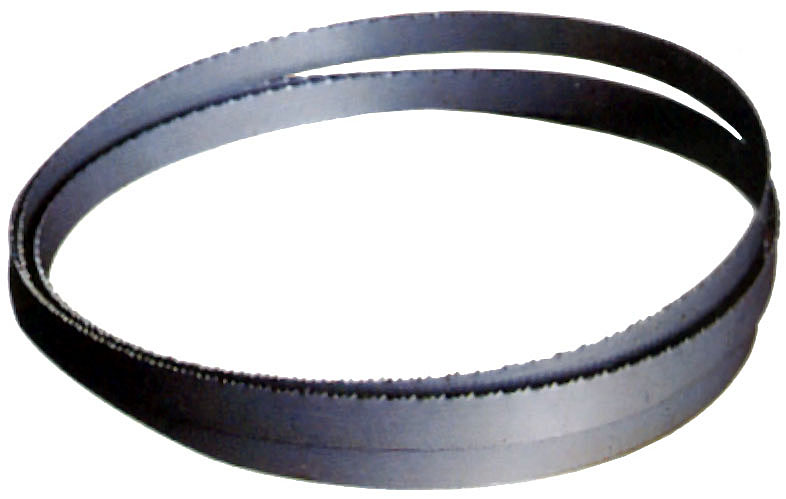
BANDSAW BLADE: CY300> 2750 X 27 X 10TPI BI-METAL
SKU:
BSB980018
* Bandsaws and reciprocating saw blades are often made with bimetal construction
* The teeth, made of high speed steel, are bonded (by various methods, for example, electron beam welding or laser beam welding) to the high-strength carbon steel base
* Such construction makes for blades with a better combination of cutting speed and durability than shown by non-bimetal blades, because the advantages and disadvantages of each of the metals are applied in the best locations: the teeth are harder (and thus cut better), but therefore also brittler; meanwhile, the body area of the band is softer (which would make for poorer teeth), but also less brittle, and thus more resistant to cracking and breaking (which is desirable in the body area) *
BANDSAW BLADE: CY300> 2750 X 27 X 14TPI BI-METAL
SKU:
BSB980018A
* Bandsaws and reciprocating saw blades are often made with bimetal construction
* The teeth, made of high speed steel, are bonded (by various methods, for example, electron beam welding or laser beam welding) to the high-strength carbon steel base
* Such construction makes for blades with a better combination of cutting speed and durability than shown by non-bimetal blades, because the advantages and disadvantages of each of the metals are applied in the best locations: the teeth are harder (and thus cut better), but therefore also brittler; meanwhile, the body area of the band is softer (which would make for poorer teeth), but also less brittle, and thus more resistant to cracking and breaking (which is desirable in the body area) *
BANDSAW BLADE: CY300> 2750 X 27 X 5/8TPI BI-METAL
SKU:
BSB980019
* Bandsaws and reciprocating saw blades are often made with bimetal construction
* The teeth, made of high speed steel, are bonded (by various methods, for example, electron beam welding or laser beam welding) to the high-strength carbon steel base
* Such construction makes for blades with a better combination of cutting speed and durability than shown by non-bimetal blades, because the advantages and disadvantages of each of the metals are applied in the best locations: the teeth are harder (and thus cut better), but therefore also brittler; meanwhile, the body area of the band is softer (which would make for poorer teeth), but also less brittle, and thus more resistant to cracking and breaking (which is desirable in the body area) *
BANDSAW BLADE: 2450 X 27 10/14TPI BI-METAL
SKU:
BSB980021
* Bandsaws and reciprocating saw blades are often made with bimetal construction
* The teeth, made of high speed steel, are bonded (by various methods, for example, electron beam welding or laser beam welding) to the high-strength carbon steel base
* Such construction makes for blades with a better combination of cutting speed and durability than shown by non-bimetal blades, because the advantages and disadvantages of each of the metals are applied in the best locations: the teeth are harder (and thus cut better), but therefore also brittler; meanwhile, the body area of the band is softer (which would make for poorer teeth), but also less brittle, and thus more resistant to cracking and breaking (which is desirable in the body area) *
BANDSAW BLADE: 3300 X 27 x 8/12TPI BI-METAL
SKU:
BSB980022
* Bandsaws and reciprocating saw blades are often made with bimetal construction
* The teeth, made of high speed steel, are bonded (by various methods, for example, electron beam welding or laser beam welding) to the high-strength carbon steel base
* Such construction makes for blades with a better combination of cutting speed and durability than shown by non-bimetal blades, because the advantages and disadvantages of each of the metals are applied in the best locations: the teeth are harder (and thus cut better), but therefore also brittler; meanwhile, the body area of the band is softer (which would make for poorer teeth), but also less brittle, and thus more resistant to cracking and breaking (which is desirable in the body area) *
BANDSAW BLADE: 2060 X 20 X 8/12T BI-METAL
SKU:
BSB980024
* Bandsaws and reciprocating saw blades are often made with bimetal construction
* The teeth, made of high speed steel, are bonded (by various methods, for example, electron beam welding or laser beam welding) to the high-strength carbon steel base
* Such construction makes for blades with a better combination of cutting speed and durability than shown by non-bimetal blades, because the advantages and disadvantages of each of the metals are applied in the best locations: the teeth are harder (and thus cut better), but therefore also brittler; meanwhile, the body area of the band is softer (which would make for poorer teeth), but also less brittle, and thus more resistant to cracking and breaking (which is desirable in the body area) *
BANDSAW BLADE: 2360 X 10 X 3TPI CB (WOOD)
SKU:
BSB980025
* Carbon blades are the economical choice for general purpose and utility sawing operations.
* These blades cut a wide variety of materials from carbon steels and aluminum to abrasive materials like fiberglass and wood
* For Metal: Bandsaw blades normally get dull from use, but some precautions will give you longer than normal wear on the blades. Blades will dull quickly if used at too rapid a speed for the metal being cut. Also, if the metal to be cut is too hard for the pitch of the blade, you will experience abnormal wear
* The most common cause of premature blade wear comes from using too fine a pitch blade and from feeding the blade too heavy
* For Wood: Proper tracking of the blade is crucial to accurate cutting and considerably reduces blade breakage. The first step to ensuring good tracking is to check that the two band wheels are co-planar. This can be done by placing a straightedge across the front of the wheels and adjusting until each wheel touches. Rotate the wheels with the blade in position and properly tensioned and check that the tracking is correct. Now install the blade guide rollers and leave a gap of about 1 mm between the back of the blade and the guide flange. The teeth of blades that have become narrow through repeated sharpening will foul the front edge of the guide rollers due to their kerf set and force the blade out of alignment. This can be remedied by cutting of a small step on the rollers' front edges to accommodate the protruding teeth. Ideally the rollers should be crowned, a configuration that assists in the proper tracking of bands and belts, at the same time allowing clearance for the set of the teeth
* Carbon blades are more flexible than bi-metal and suit contour work in wood *
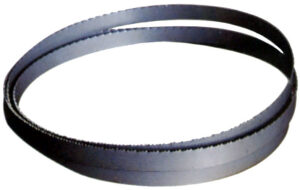
BANDSAW BLADE: UE-712 2360 X 19 X 6TPI CB (Carbon Steel)
SKU:
BSB980026
* Carbon blades are the economical choice for general purpose and utility sawing operations.
* These blades cut a wide variety of materials from carbon steels and aluminum to abrasive materials like fiberglass and wood
* For Metal: Bandsaw blades normally get dull from use, but some precautions will give you longer than normal wear on the blades. Blades will dull quickly if used at too rapid a speed for the metal being cut. Also, if the metal to be cut is too hard for the pitch of the blade, you will experience abnormal wear
* The most common cause of premature blade wear comes from using too fine a pitch blade and from feeding the blade too heavy
* For Wood: Proper tracking of the blade is crucial to accurate cutting and considerably reduces blade breakage. The first step to ensuring good tracking is to check that the two band wheels are co-planar. This can be done by placing a straightedge across the front of the wheels and adjusting until each wheel touches. Rotate the wheels with the blade in position and properly tensioned and check that the tracking is correct. Now install the blade guide rollers and leave a gap of about 1 mm between the back of the blade and the guide flange. The teeth of blades that have become narrow through repeated sharpening will foul the front edge of the guide rollers due to their kerf set and force the blade out of alignment. This can be remedied by cutting of a small step on the rollers' front edges to accommodate the protruding teeth. Ideally the rollers should be crowned, a configuration that assists in the proper tracking of bands and belts, at the same time allowing clearance for the set of the teeth
* Carbon blades are more flexible than bi-metal and suit contour work in wood *
BANDSAW BLADE: 2360 X 19 X 14TPI CB (WOOD)
SKU:
BSB980027
* Carbon blades are the economical choice for general purpose and utility sawing operations.
* These blades cut a wide variety of materials from carbon steels and aluminum to abrasive materials like fiberglass and wood
* For Metal: Bandsaw blades normally get dull from use, but some precautions will give you longer than normal wear on the blades. Blades will dull quickly if used at too rapid a speed for the metal being cut. Also, if the metal to be cut is too hard for the pitch of the blade, you will experience abnormal wear
* The most common cause of premature blade wear comes from using too fine a pitch blade and from feeding the blade too heavy
* For Wood: Proper tracking of the blade is crucial to accurate cutting and considerably reduces blade breakage. The first step to ensuring good tracking is to check that the two band wheels are co-planar. This can be done by placing a straightedge across the front of the wheels and adjusting until each wheel touches. Rotate the wheels with the blade in position and properly tensioned and check that the tracking is correct. Now install the blade guide rollers and leave a gap of about 1 mm between the back of the blade and the guide flange. The teeth of blades that have become narrow through repeated sharpening will foul the front edge of the guide rollers due to their kerf set and force the blade out of alignment. This can be remedied by cutting of a small step on the rollers' front edges to accommodate the protruding teeth. Ideally the rollers should be crowned, a configuration that assists in the proper tracking of bands and belts, at the same time allowing clearance for the set of the teeth
* Carbon blades are more flexible than bi-metal and suit contour work in wood *
BANDSAW BLADE: 2620 x 13 x 6TPI BI-METAL
SKU:
BSB980028
* Bandsaws and reciprocating saw blades are often made with bimetal construction
* The teeth, made of high speed steel, are bonded (by various methods, for example, electron beam welding or laser beam welding) to the high-strength carbon steel base
* Such construction makes for blades with a better combination of cutting speed and durability than shown by non-bimetal blades, because the advantages and disadvantages of each of the metals are applied in the best locations: the teeth are harder (and thus cut better), but therefore also brittler; meanwhile, the body area of the band is softer (which would make for poorer teeth), but also less brittle, and thus more resistant to cracking and breaking (which is desirable in the body area) *
BANDSAW BLADE: 2997 X 27 X 8/12TPI BI-METAL
SKU:
BSB980032
* Bandsaws and reciprocating saw blades are often made with bimetal construction
* The teeth, made of high speed steel, are bonded (by various methods, for example, electron beam welding or laser beam welding) to the high-strength carbon steel base
* Such construction makes for blades with a better combination of cutting speed and durability than shown by non-bimetal blades, because the advantages and disadvantages of each of the metals are applied in the best locations: the teeth are harder (and thus cut better), but therefore also brittler; meanwhile, the body area of the band is softer (which would make for poorer teeth), but also less brittle, and thus more resistant to cracking and breaking (which is desirable in the body area) *
BANDSAW BLADE: 3035 X 27 X 6/10T BI-METAL
SKU:
BSB980033
* Bandsaws and reciprocating saw blades are often made with bimetal construction
* The teeth, made of high speed steel, are bonded (by various methods, for example, electron beam welding or laser beam welding) to the high-strength carbon steel base
* Such construction makes for blades with a better combination of cutting speed and durability than shown by non-bimetal blades, because the advantages and disadvantages of each of the metals are applied in the best locations: the teeth are harder (and thus cut better), but therefore also brittler; meanwhile, the body area of the band is softer (which would make for poorer teeth), but also less brittle, and thus more resistant to cracking and breaking (which is desirable in the body area) *
BANDSAW BLADE: 3035 X 27 X 8/12TPI BM
SKU:
BSB980034
* Bandsaws and reciprocating saw blades are often made with bimetal construction
* The teeth, made of high speed steel, are bonded (by various methods, for example, electron beam welding or laser beam welding) to the high-strength carbon steel base
* Such construction makes for blades with a better combination of cutting speed and durability than shown by non-bimetal blades, because the advantages and disadvantages of each of the metals are applied in the best locations: the teeth are harder (and thus cut better), but therefore also brittler; meanwhile, the body area of the band is softer (which would make for poorer teeth), but also less brittle, and thus more resistant to cracking and breaking (which is desirable in the body area) *
BANDSAW BLADE: 3035 X 25 X 5/8TPI BI-METAL
SKU:
BSB980035
* Bandsaws and reciprocating saw blades are often made with bimetal construction
* The teeth, made of high speed steel, are bonded (by various methods, for example, electron beam welding or laser beam welding) to the high-strength carbon steel base
* Such construction makes for blades with a better combination of cutting speed and durability than shown by non-bimetal blades, because the advantages and disadvantages of each of the metals are applied in the best locations: the teeth are harder (and thus cut better), but therefore also brittler; meanwhile, the body area of the band is softer (which would make for poorer teeth), but also less brittle, and thus more resistant to cracking and breaking (which is desirable in the body area) *
BANDSAW BLADE: 3470 X 16 X 6TPI CARBON
SKU:
BSB9800358
* Bandsaws and reciprocating saw blades are often made with bimetal construction
* The teeth, made of high speed steel, are bonded (by various methods, for example, electron beam welding or laser beam welding) to the high-strength carbon steel base
* Such construction makes for blades with a better combination of cutting speed and durability than shown by non-bimetal blades, because the advantages and disadvantages of each of the metals are applied in the best locations: the teeth are harder (and thus cut better), but therefore also brittler; meanwhile, the body area of the band is softer (which would make for poorer teeth), but also less brittle, and thus more resistant to cracking and breaking (which is desirable in the body area) *
BANDSAW BLADE: 3380 X 10 X 8TPI CB (WOOD)
SKU:
BSB9800359
* Bandsaws and reciprocating saw blades are often made with bimetal construction
* The teeth, made of high speed steel, are bonded (by various methods, for example, electron beam welding or laser beam welding) to the high-strength carbon steel base
* Such construction makes for blades with a better combination of cutting speed and durability than shown by non-bimetal blades, because the advantages and disadvantages of each of the metals are applied in the best locations: the teeth are harder (and thus cut better), but therefore also brittler; meanwhile, the body area of the band is softer (which would make for poorer teeth), but also less brittle, and thus more resistant to cracking and breaking (which is desirable in the body area) *
BANDSAW BLADE: 3470 X 20 X 10/14TPI BI-METAL
SKU:
BSB980036
* Bandsaws and reciprocating saw blades are often made with bimetal construction
* The teeth, made of high speed steel, are bonded (by various methods, for example, electron beam welding or laser beam welding) to the high-strength carbon steel base
* Such construction makes for blades with a better combination of cutting speed and durability than shown by non-bimetal blades, because the advantages and disadvantages of each of the metals are applied in the best locations: the teeth are harder (and thus cut better), but therefore also brittler; meanwhile, the body area of the band is softer (which would make for poorer teeth), but also less brittle, and thus more resistant to cracking and breaking (which is desirable in the body area) *
BANDSAW BLADE: 3380 X 10 X 10/14TPI BI-METAL
SKU:
BSB9800360
* Bandsaws and reciprocating saw blades are often made with bimetal construction
* The teeth, made of high speed steel, are bonded (by various methods, for example, electron beam welding or laser beam welding) to the high-strength carbon steel base
* Such construction makes for blades with a better combination of cutting speed and durability than shown by non-bimetal blades, because the advantages and disadvantages of each of the metals are applied in the best locations: the teeth are harder (and thus cut better), but therefore also brittler; meanwhile, the body area of the band is softer (which would make for poorer teeth), but also less brittle, and thus more resistant to cracking and breaking (which is desirable in the body area) *
BANDSAW BLADE: 10500 X 1/2″ X 18TPI BI-METAL
SKU:
BSB9800365
* Bandsaws and reciprocating saw blades are often made with bimetal construction
* The teeth, made of high speed steel, are bonded (by various methods, for example, electron beam welding or laser beam welding) to the high-strength carbon steel base
* Such construction makes for blades with a better combination of cutting speed and durability than shown by non-bimetal blades, because the advantages and disadvantages of each of the metals are applied in the best locations: the teeth are harder (and thus cut better), but therefore also brittler; meanwhile, the body area of the band is softer (which would make for poorer teeth), but also less brittle, and thus more resistant to cracking and breaking (which is desirable in the body area) *
BANDSAW BLADE: 3380 X 20 x 10/14TPI BI-METAL
SKU:
BSB980037
* Carbon blades are the economical choice for general purpose and utility sawing operations.
* These blades cut a wide variety of materials from carbon steels and aluminum to abrasive materials like fiberglass and wood
* For Metal: Bandsaw blades normally get dull from use, but some precautions will give you longer than normal wear on the blades. Blades will dull quickly if used at too rapid a speed for the metal being cut. Also, if the metal to be cut is too hard for the pitch of the blade, you will experience abnormal wear
* The most common cause of premature blade wear comes from using too fine a pitch blade and from feeding the blade too heavy
* For Wood: Proper tracking of the blade is crucial to accurate cutting and considerably reduces blade breakage. The first step to ensuring good tracking is to check that the two band wheels are co-planar. This can be done by placing a straightedge across the front of the wheels and adjusting until each wheel touches. Rotate the wheels with the blade in position and properly tensioned and check that the tracking is correct. Now install the blade guide rollers and leave a gap of about 1 mm between the back of the blade and the guide flange. The teeth of blades that have become narrow through repeated sharpening will foul the front edge of the guide rollers due to their kerf set and force the blade out of alignment. This can be remedied by cutting of a small step on the rollers' front edges to accommodate the protruding teeth. Ideally the rollers should be crowned, a configuration that assists in the proper tracking of bands and belts, at the same time allowing clearance for the set of the teeth
* Carbon blades are more flexible than bi-metal and suit contour work in wood *
BANDSAW BLADE: 3353 X 27 X 3/4TPI BI-METAL
SKU:
BSB980038
* Bandsaws and reciprocating saw blades are often made with bimetal construction
* The teeth, made of high speed steel, are bonded (by various methods, for example, electron beam welding or laser beam welding) to the high-strength carbon steel base
* Such construction makes for blades with a better combination of cutting speed and durability than shown by non-bimetal blades, because the advantages and disadvantages of each of the metals are applied in the best locations: the teeth are harder (and thus cut better), but therefore also brittler; meanwhile, the body area of the band is softer (which would make for poorer teeth), but also less brittle, and thus more resistant to cracking and breaking (which is desirable in the body area) *
BANDSAW BLADE: 3353 x 27 x 18 TPI BI-METAL
SKU:
BSB980039A
* Bandsaws and reciprocating saw blades are often made with bimetal construction
* The teeth, made of high speed steel, are bonded (by various methods, for example, electron beam welding or laser beam welding) to the high-strength carbon steel base
* Such construction makes for blades with a better combination of cutting speed and durability than shown by non-bimetal blades, because the advantages and disadvantages of each of the metals are applied in the best locations: the teeth are harder (and thus cut better), but therefore also brittler; meanwhile, the body area of the band is softer (which would make for poorer teeth), but also less brittle, and thus more resistant to cracking and breaking (which is desirable in the body area) *