
- Show All
- AUTO RECONDITIONING MACHINES
- AXLE STANDS
- BATTERY CHARGERS
- ENGINE STANDS
- GREASE & OILS
- HYDRAULIC BODY JACKS
- HYDRAULIC BOTTLE JACKS
- HYDRAULIC TOE JACKS
- HYDRAULIC TROLLEY JACKS
- HYD ENGINE CRANES
- HYD MOTORCYCLE LIFT
- HYD TRANSMISSION JACKS
- HYD SPRING COMPRESSOR
- HYD VEHICLE POSITIONING JACK
- GARAGE ESSENTIALS
- OIL DRAIN TANK
- PANEL BEATING EQUIPMENT
- WORKSHOP PRESSES
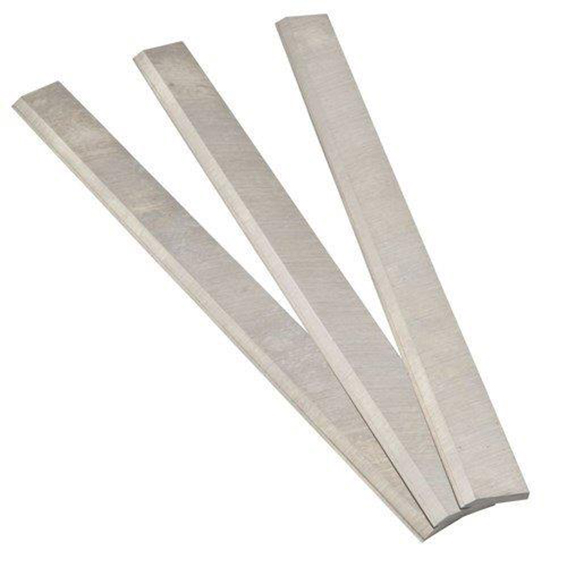
JOINTER BLADES: 6″ 3PC SET 154 X 16.5 X 2.7MM HSS
SKU:
BBL142520
JOINTER BLADES: 6″ 3PC SET 154 X 20 X 3MM HSS
SKU:
BBL142522
JOINTER BLADES: 6″ 3PC SET 154 X 25 X 3MM HSS
SKU:
BBL142528

JOINTER BLADES: 6″ 3PC SET 153 X 16 X 2.7MM TUNGSTEN
SKU:
BBL143020
JOINTER BLADES: 6″ 3PC SET 154 X 25 X 3.0MM TUNGSTEN
SKU:
BBL143024
JOINTER BLADES: 8″ 3PC SET 205MM X 20 X 3MM TUNGSTEN
SKU:
BBL143030
JOINTER BLADES: 8″ 4PC SET 205MM X 20 X 3MM TUNGSTEN
SKU:
BBL143031
JOINTER BLADES: 8″ 3PC SET 205MM X 25 X 3MM TUNGSTEN
SKU:
BBL143034
JOINTER BLADES: 8″ 4PC SET 205MM X 25 X 3MM TUNGSTEN
SKU:
BBL143035
JOINTER BLADES: 12″ 3PC SET 305 X 20 X 3.0MM TUNGSTEN
SKU:
BBL143040
JOINTER BLADES: 12″ 4PC SET 305 X 20 X 3.0MM TUNGSTEN
SKU:
BBL143041
JOINTER BLADES: 12″ 3PC SET 305 X 25 X 3MM TUNGSTEN
SKU:
BBL143044
JOINTER BLADES: 12″ 4PC SET 305 X 25 X 3MM TUNGSTEN
SKU:
BBL143045


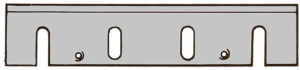
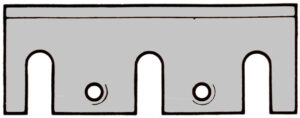


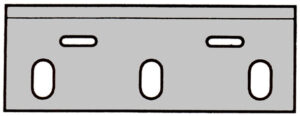
ADAPTOR KIT: LINBIDE 82MM
SKU:
BBL144350

INDEXABLE DOUBLE EDGE KNIVES: NO19
SKU:
BBL144410
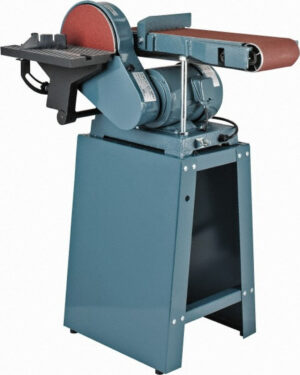
BELT/DISC SANDER: 150 x 1220MM BELT 250MM DISC
SKU:
BDS240924
* The BDW-612 is suitable for wood apllications
* The belt can operate horizontal and up to 90ø
* Equiped with a quick change lever to change belts
* The large aluminium table can be tilted up to 45ø
* Motor is totaly built in for safety
* Comes with dust cover collection port
* Comes complete with stand
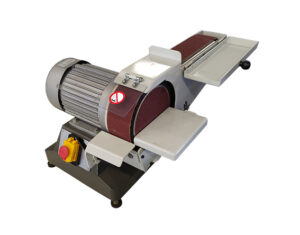
BELT/DISC SANDER: 75 X 1220MM METAL
SKU:
BDS240926

BELT/DISC SANDER: BDM-612 1HP 6″ X 48″ BELT X 12″ DISC
SKU:
BDS240928
* The BDM-612 is a heavy duty sander
* Main belt is 152 x 1219mm and has a substantial cast table that can be tilted to 45 degs
* The sanding belt can be altered from the vertical to horizontal or any angle in between - * The 300mm sanding disc table can also be tilted 45 degs with a positive lock on each side of the table
* Both tables are slotted to take a mitre gauge which is supplied with the machine.
* The heavy cast base gives this machine rigidity under all sanding conditions.

BELT/DISC SANDER: BD-200-12 1HP 200MM BELT X 12″ DISC
SKU:
BDS240940
* The BD-612 is a heavy duty sander
* Main belt is 152 x 1219mm and has a substantial cast table that can be tilted to 45 degs
* The sanding belt can be altered from the vertical to horizontal or any angle in between
* The 300mm sanding disc table can also be tilted 45 degs with a positive lock on each side of the table
* Both tables are slotted to take a mitre gauge which is supplied with the machine
* The heavy cast base gives this machine rigidity under all sanding conditions.
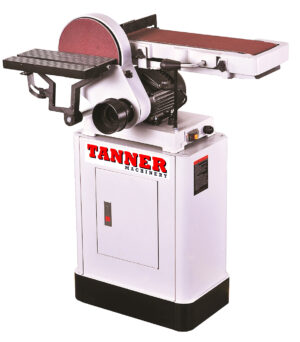
BELT/DISC SANDER: TANNER W506 3/4HP 152MM BELT X 9″DISC
SKU:
BDS240950
* The BD-612 is a heavy duty sander
* Main belt is 152 x 1219mm and has a substantial cast table that can be tilted to 45 degs
* The sanding belt can be altered from the vertical to horizontal or any angle in between * The 300mm sanding disc table can also be tilted 45 degs with a positive lock on each side of the table
* Both tables are slotted to take a mitre gauge which is supplied with the machine
* The heavy cast base gives this machine rigidity under all sanding conditions.
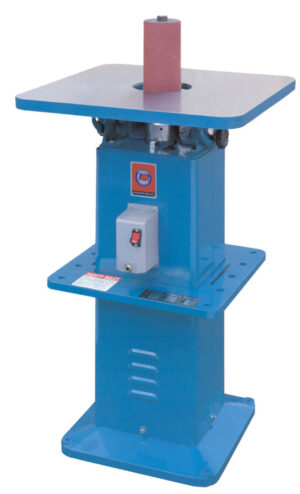
BOBIN SANDER: OVS-JM 1HP 1PH
SKU:
BOB700710
* The oscillating sanding provides an extremely fine sanding finish
* Ten sanding drums can be accommodated * Easily interchanged spindles
* The Rubber drum can be fitted on both ends to fully utilise the intire spindle
* The tilting table is precision ground
* Heavy gauge steel frame Key switch with circuit breaker for overload protection
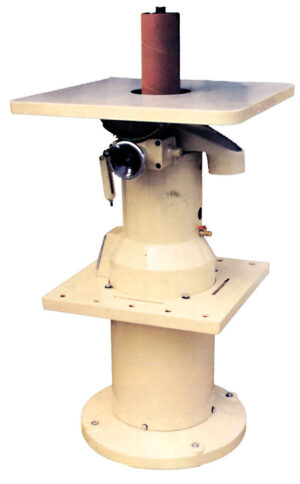
BOBIN SANDER: OVS-10 1HP 1PH
SKU:
BOB700715
* The oscillating sanding provides an extremely fine sanding finish
* Ten sanding drums can be accommodated
* Easily interchanged spindles
* The Rubber drum can be fitted on both ends to fully utilise the intire spindle
* The tilting table is precision ground
* Heavy gauge steel frame key switch with circuit breaker for overload protection

BOBIN SANDER: OVS-10 JET
SKU:
BOB700720
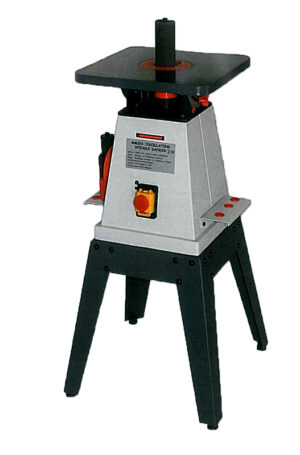
BOBIN SANDER: MM-326 1/2HP
SKU:
BOB700730

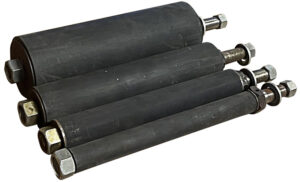
BOBIN SANDER: GS-306E 2HP 3PH
SKU:
BOB700740
* This is an ideal sander for profile sanding
* Different grits can be fitted at each end to allow for roughing and finishing
* Very versitile machine with many uses * Comes on all steel cabinet stand
* The lower roller has sponge backing allowing the workpiece to be presses into the roller and sand the profile
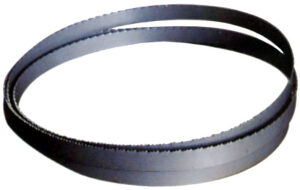
BANDSAW BLADE: 2490 X 5/8 X 6TPI CB (WOOD)
SKU:
BSB600126
* Carbon blades are the economical choice for general purpose and utility sawing operations.
* These blades cut a wide variety of materials from carbon steels and aluminum to abrasive materials like fiberglass and wood
* For Metal: Bandsaw blades normally get dull from use, but some precautions will give you longer than normal wear on the blades. Blades will dull quickly if used at too rapid a speed for the metal being cut. Also, if the metal to be cut is too hard for the pitch of the blade, you will experience abnormal wear
* The most common cause of premature blade wear comes from using too fine a pitch blade and from feeding the blade too heavy
* For Wood: Proper tracking of the blade is crucial to accurate cutting and considerably reduces blade breakage. The first step to ensuring good tracking is to check that the two band wheels are co-planar. This can be done by placing a straightedge across the front of the wheels and adjusting until each wheel touches. Rotate the wheels with the blade in position and properly tensioned and check that the tracking is correct. Now install the blade guide rollers and leave a gap of about 1 mm between the back of the blade and the guide flange. The teeth of blades that have become narrow through repeated sharpening will foul the front edge of the guide rollers due to their kerf set and force the blade out of alignment. This can be remedied by cutting of a small step on the rollers' front edges to accommodate the protruding teeth. Ideally the rollers should be crowned, a configuration that assists in the proper tracking of bands and belts, at the same time allowing clearance for the set of the teeth
* Carbon blades are more flexible than bi-metal and suit contour work in wood *
BANDSAW BLADE: 2550 X 10 X 6TPI CB (WOOD)
SKU:
BSB600154
* Carbon blades are the economical choice for general purpose and utility sawing operations.
* These blades cut a wide variety of materials from carbon steels and aluminum to abrasive materials like fiberglass and wood
* For Metal: Bandsaw blades normally get dull from use, but some precautions will give you longer than normal wear on the blades. Blades will dull quickly if used at too rapid a speed for the metal being cut. Also, if the metal to be cut is too hard for the pitch of the blade, you will experience abnormal wear
* The most common cause of premature blade wear comes from using too fine a pitch blade and from feeding the blade too heavy
* For Wood: Proper tracking of the blade is crucial to accurate cutting and considerably reduces blade breakage. The first step to ensuring good tracking is to check that the two band wheels are co-planar. This can be done by placing a straightedge across the front of the wheels and adjusting until each wheel touches. Rotate the wheels with the blade in position and properly tensioned and check that the tracking is correct. Now install the blade guide rollers and leave a gap of about 1 mm between the back of the blade and the guide flange. The teeth of blades that have become narrow through repeated sharpening will foul the front edge of the guide rollers due to their kerf set and force the blade out of alignment. This can be remedied by cutting of a small step on the rollers' front edges to accommodate the protruding teeth. Ideally the rollers should be crowned, a configuration that assists in the proper tracking of bands and belts, at the same time allowing clearance for the set of the teeth
* Carbon blades are more flexible than bi-metal and suit contour work in wood *
BANDSAW BLADE: 2553 X 10 X 18TPI CB (WOOD)
SKU:
BSB600155
* Carbon blades are the economical choice for general purpose and utility sawing operations.
* These blades cut a wide variety of materials from carbon steels and aluminum to abrasive materials like fiberglass and wood
* For Metal: Bandsaw blades normally get dull from use, but some precautions will give you longer than normal wear on the blades. Blades will dull quickly if used at too rapid a speed for the metal being cut. Also, if the metal to be cut is too hard for the pitch of the blade, you will experience abnormal wear
* The most common cause of premature blade wear comes from using too fine a pitch blade and from feeding the blade too heavy
* For Wood: Proper tracking of the blade is crucial to accurate cutting and considerably reduces blade breakage. The first step to ensuring good tracking is to check that the two band wheels are co-planar. This can be done by placing a straightedge across the front of the wheels and adjusting until each wheel touches. Rotate the wheels with the blade in position and properly tensioned and check that the tracking is correct. Now install the blade guide rollers and leave a gap of about 1 mm between the back of the blade and the guide flange. The teeth of blades that have become narrow through repeated sharpening will foul the front edge of the guide rollers due to their kerf set and force the blade out of alignment. This can be remedied by cutting of a small step on the rollers' front edges to accommodate the protruding teeth. Ideally the rollers should be crowned, a configuration that assists in the proper tracking of bands and belts, at the same time allowing clearance for the set of the teeth
* Carbon blades are more flexible than bi-metal and suit contour work in wood *
BANDSAW BLADE: 2553 X 10 X 14TPI CB (WOOD)
SKU:
BSB600156
*Carbon blades are the economical choice for general purpose and utility sawing operations.
* These blades cut a wide variety of materials from carbon steels and aluminum to abrasive materials like fiberglass and wood
* For Metal: Bandsaw blades normally get dull from use, but some precautions will give you longer than normal wear on the blades. Blades will dull quickly if used at too rapid a speed for the metal being cut. Also, if the metal to be cut is too hard for the pitch of the blade, you will experience abnormal wear
* The most common cause of premature blade wear comes from using too fine a pitch blade and from feeding the blade too heavy
* For Wood: Proper tracking of the blade is crucial to accurate cutting and considerably reduces blade breakage. The first step to ensuring good tracking is to check that the two band wheels are co-planar. This can be done by placing a straightedge across the front of the wheels and adjusting until each wheel touches. Rotate the wheels with the blade in position and properly tensioned and check that the tracking is correct. Now install the blade guide rollers and leave a gap of about 1 mm between the back of the blade and the guide flange. The teeth of blades that have become narrow through repeated sharpening will foul the front edge of the guide rollers due to their kerf set and force the blade out of alignment. This can be remedied by cutting of a small step on the rollers' front edges to accommodate the protruding teeth. Ideally the rollers should be crowned, a configuration that assists in the proper tracking of bands and belts, at the same time allowing clearance for the set of the teeth
* Carbon blades are more flexible than bi-metal and suit contour work in wood *
BANDSAW BLADE: 2480 X 12 X 3T CB (WOOD)
SKU:
BSB600163
* Carbon blades are the economical choice for general purpose and utility sawing operations.
* These blades cut a wide variety of materials from carbon steels and aluminum to abrasive materials like fiberglass and wood
* For Metal: Bandsaw blades normally get dull from use, but some precautions will give you longer than normal wear on the blades. Blades will dull quickly if used at too rapid a speed for the metal being cut. Also, if the metal to be cut is too hard for the pitch of the blade, you will experience abnormal wear
* The most common cause of premature blade wear comes from using too fine a pitch blade and from feeding the blade too heavy
* For Wood: Proper tracking of the blade is crucial to accurate cutting and considerably reduces blade breakage. The first step to ensuring good tracking is to check that the two band wheels are co-planar. This can be done by placing a straightedge across the front of the wheels and adjusting until each wheel touches. Rotate the wheels with the blade in position and properly tensioned and check that the tracking is correct. Now install the blade guide rollers and leave a gap of about 1 mm between the back of the blade and the guide flange. The teeth of blades that have become narrow through repeated sharpening will foul the front edge of the guide rollers due to their kerf set and force the blade out of alignment. This can be remedied by cutting of a small step on the rollers' front edges to accommodate the protruding teeth. Ideally the rollers should be crowned, a configuration that assists in the proper tracking of bands and belts, at the same time allowing clearance for the set of the teeth
* Carbon blades are more flexible than bi-metal and suit contour work in wood *

BANDSAW BLADE: 2750 X 15 X 4T CB (WOOD)
SKU:
BSB600165
*Carbon blades are the economical choice for general purpose and utility sawing operations.
* These blades cut a wide variety of materials from carbon steels and aluminum to abrasive materials like fiberglass and wood
* For Metal: Bandsaw blades normally get dull from use, but some precautions will give you longer than normal wear on the blades. Blades will dull quickly if used at too rapid a speed for the metal being cut. Also, if the metal to be cut is too hard for the pitch of the blade, you will experience abnormal wear
* The most common cause of premature blade wear comes from using too fine a pitch blade and from feeding the blade too heavy
* For Wood: Proper tracking of the blade is crucial to accurate cutting and considerably reduces blade breakage. The first step to ensuring good tracking is to check that the two band wheels are co-planar. This can be done by placing a straightedge across the front of the wheels and adjusting until each wheel touches. Rotate the wheels with the blade in position and properly tensioned and check that the tracking is correct. Now install the blade guide rollers and leave a gap of about 1 mm between the back of the blade and the guide flange. The teeth of blades that have become narrow through repeated sharpening will foul the front edge of the guide rollers due to their kerf set and force the blade out of alignment. This can be remedied by cutting of a small step on the rollers' front edges to accommodate the protruding teeth. Ideally the rollers should be crowned, a configuration that assists in the proper tracking of bands and belts, at the same time allowing clearance for the set of the teeth
* Carbon blades are more flexible than bi-metal and suit contour work in wood *
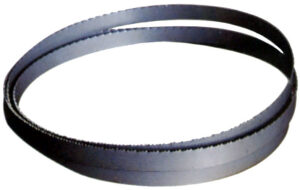
BANDSAW BLADE: 2750 X 15 X 6T CB (WOOD)
SKU:
BSB600166
* Carbon blades are the economical choice for general purpose and utility sawing operations.
* These blades cut a wide variety of materials from carbon steels and aluminum to abrasive materials like fiberglass and wood
* For Metal: Bandsaw blades normally get dull from use, but some precautions will give you longer than normal wear on the blades. Blades will dull quickly if used at too rapid a speed for the metal being cut. Also, if the metal to be cut is too hard for the pitch of the blade, you will experience abnormal wear
* The most common cause of premature blade wear comes from using too fine a pitch blade and from feeding the blade too heavy
* For Wood: Proper tracking of the blade is crucial to accurate cutting and considerably reduces blade breakage. The first step to ensuring good tracking is to check that the two band wheels are co-planar. This can be done by placing a straightedge across the front of the wheels and adjusting until each wheel touches. Rotate the wheels with the blade in position and properly tensioned and check that the tracking is correct. Now install the blade guide rollers and leave a gap of about 1 mm between the back of the blade and the guide flange. The teeth of blades that have become narrow through repeated sharpening will foul the front edge of the guide rollers due to their kerf set and force the blade out of alignment. This can be remedied by cutting of a small step on the rollers' front edges to accommodate the protruding teeth. Ideally the rollers should be crowned, a configuration that assists in the proper tracking of bands and belts, at the same time allowing clearance for the set of the teeth
* Carbon blades are more flexible than bi-metal and suit contour work in wood *
BANDSAW BLADE: 2750 X 15 X 8T CB (WOOD)
SKU:
BSB600167
* Carbon blades are the economical choice for general purpose and utility sawing operations. These blades cut a wide variety of materials from carbon steels and aluminum to abrasive materials like fiberglass and wood
*For Metal: Bandsaw blades normally get dull from use, but some precautions will give you longer than normal wear on the blades. Blades will dull quickly if used at too rapid a speed for the metal being cut. Also, if the metal to be cut is too hard for the pitch of the blade, you will experience abnormal wear
* The most common cause of premature blade wear comes from using too fine a pitch blade and from feeding the blade too heavy
* For Wood: Proper tracking of the blade is crucial to accurate cutting and considerably reduces blade breakage. The first step to ensuring good tracking is to check that the two band wheels are co-planar. This can be done by placing a straightedge across the front of the wheels and adjusting until each wheel touches. Rotate the wheels with the blade in position and properly tensioned and check that the tracking is correct. Now install the blade guide rollers and leave a gap of about 1 mm between the back of the blade and the guide flange. The teeth of blades that have become narrow through repeated sharpening will foul the front edge of the guide rollers due to their kerf set and force the blade out of alignment. This can be remedied by cutting of a small step on the rollers' front edges to accommodate the protruding teeth. Ideally the rollers should be crowned, a configuration that assists in the proper tracking of bands and belts, at the same time allowing clearance for the set of the teeth
* Carbon blades are more flexible than bi-metal and suit contour work in wood *
BANDSAW BLADE: 2740 X 16 X 6TPI CB (WOOD)
SKU:
BSB600169
* Carbon blades are the economical choice for general purpose and utility sawing operations.
* These blades cut a wide variety of materials from carbon steels and aluminum to abrasive materials like fiberglass and wood
* For Metal: Bandsaw blades normally get dull from use, but some precautions will give you longer than normal wear on the blades. Blades will dull quickly if used at too rapid a speed for the metal being cut. Also, if the metal to be cut is too hard for the pitch of the blade, you will experience abnormal wear
* The most common cause of premature blade wear comes from using too fine a pitch blade and from feeding the blade too heavy
* For Wood: Proper tracking of the blade is crucial to accurate cutting and considerably reduces blade breakage. The first step to ensuring good tracking is to check that the two band wheels are co-planar. This can be done by placing a straightedge across the front of the wheels and adjusting until each wheel touches. Rotate the wheels with the blade in position and properly tensioned and check that the tracking is correct. Now install the blade guide rollers and leave a gap of about 1 mm between the back of the blade and the guide flange. The teeth of blades that have become narrow through repeated sharpening will foul the front edge of the guide rollers due to their kerf set and force the blade out of alignment. This can be remedied by cutting of a small step on the rollers' front edges to accommodate the protruding teeth. Ideally the rollers should be crowned, a configuration that assists in the proper tracking of bands and belts, at the same time allowing clearance for the set of the teeth
* Carbon blades are more flexible than bi-metal and suit contour work in wood *
BANDSAW BLADE: 2770 X 16 X 6TPI CB (WOOD)
SKU:
BSB600174
* Carbon blades are the economical choice for general purpose and utility sawing operations.
* These blades cut a wide variety of materials from carbon steels and aluminum to abrasive materials like fiberglass and wood
* For Metal: Bandsaw blades normally get dull from use, but some precautions will give you longer than normal wear on the blades. Blades will dull quickly if used at too rapid a speed for the metal being cut. Also, if the metal to be cut is too hard for the pitch of the blade, you will experience abnormal wear
* The most common cause of premature blade wear comes from using too fine a pitch blade and from feeding the blade too heavy
* For Wood: Proper tracking of the blade is crucial to accurate cutting and considerably reduces blade breakage. The first step to ensuring good tracking is to check that the two band wheels are co-planar. This can be done by placing a straightedge across the front of the wheels and adjusting until each wheel touches. Rotate the wheels with the blade in position and properly tensioned and check that the tracking is correct. Now install the blade guide rollers and leave a gap of about 1 mm between the back of the blade and the guide flange. The teeth of blades that have become narrow through repeated sharpening will foul the front edge of the guide rollers due to their kerf set and force the blade out of alignment. This can be remedied by cutting of a small step on the rollers' front edges to accommodate the protruding teeth. Ideally the rollers should be crowned, a configuration that assists in the proper tracking of bands and belts, at the same time allowing clearance for the set of the teeth
* Carbon blades are more flexible than bi-metal and suit contour work in wood *
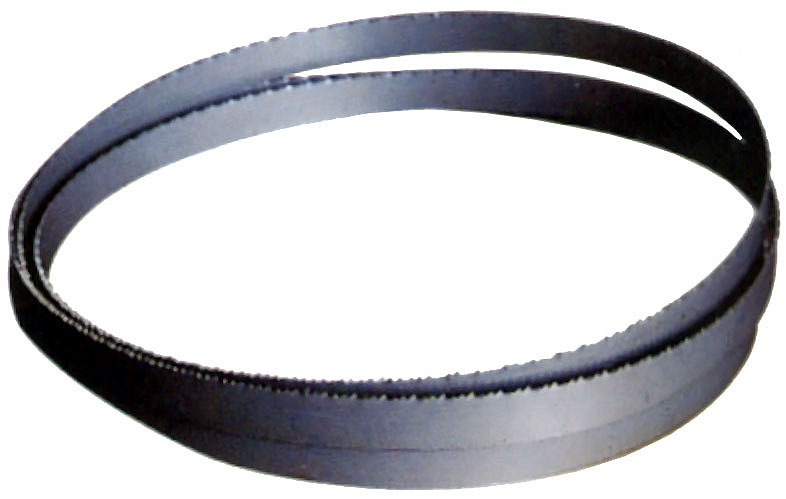
BANDSAW BLADE: 2480 X 6.2 x 0.52 X 30T CB (WOOD)
SKU:
BSB600175
* Carbon blades are the economical choice for general purpose and utility sawing operations.
* These blades cut a wide variety of materials from carbon steels and aluminum to abrasive materials like fiberglass and wood
* For Metal: Bandsaw blades normally get dull from use, but some precautions will give you longer than normal wear on the blades. Blades will dull quickly if used at too rapid a speed for the metal being cut. Also, if the metal to be cut is too hard for the pitch of the blade, you will experience abnormal wear
* The most common cause of premature blade wear comes from using too fine a pitch blade and from feeding the blade too heavy
* For Wood: Proper tracking of the blade is crucial to accurate cutting and considerably reduces blade breakage. The first step to ensuring good tracking is to check that the two band wheels are co-planar. This can be done by placing a straightedge across the front of the wheels and adjusting until each wheel touches. Rotate the wheels with the blade in position and properly tensioned and check that the tracking is correct. Now install the blade guide rollers and leave a gap of about 1 mm between the back of the blade and the guide flange. The teeth of blades that have become narrow through repeated sharpening will foul the front edge of the guide rollers due to their kerf set and force the blade out of alignment. This can be remedied by cutting of a small step on the rollers' front edges to accommodate the protruding teeth. Ideally the rollers should be crowned, a configuration that assists in the proper tracking of bands and belts, at the same time allowing clearance for the set of the teeth
* Carbon blades are more flexible than bi-metal and suit contour work in wood *
BANDSAW BLADE: 1425 X 1/4MM 6TPI CB (WOOD)
SKU:
BSB991100
* Carbon blades are the economical choice for general purpose and utility sawing operations.
* These blades cut a wide variety of materials from carbon steels and aluminum to abrasive materials like fiberglass and wood
* For Metal: Bandsaw blades normally get dull from use, but some precautions will give you longer than normal wear on the blades. Blades will dull quickly if used at too rapid a speed for the metal being cut. Also, if the metal to be cut is too hard for the pitch of the blade, you will experience abnormal wear
* The most common cause of premature blade wear comes from using too fine a pitch blade and from feeding the blade too heavy
* For Wood: Proper tracking of the blade is crucial to accurate cutting and considerably reduces blade breakage. The first step to ensuring good tracking is to check that the two band wheels are co-planar. This can be done by placing a straightedge across the front of the wheels and adjusting until each wheel touches. Rotate the wheels with the blade in position and properly tensioned and check that the tracking is correct. Now install the blade guide rollers and leave a gap of about 1 mm between the back of the blade and the guide flange. The teeth of blades that have become narrow through repeated sharpening will foul the front edge of the guide rollers due to their kerf set and force the blade out of alignment. This can be remedied by cutting of a small step on the rollers' front edges to accommodate the protruding teeth. Ideally the rollers should be crowned, a configuration that assists in the proper tracking of bands and belts, at the same time allowing clearance for the set of the teeth
* Carbon blades are more flexible than bi-metal and suit contour work in wood *
BANDSAW BLADE: 1735 X 10MM X 10TPI CB (WOOD)
SKU:
BSB991108
* Carbon blades are the economical choice for general purpose and utility sawing operations.
* These blades cut a wide variety of materials from carbon steels and aluminum to abrasive materials like fiberglass and wood
* For Metal: Bandsaw blades normally get dull from use, but some precautions will give you longer than normal wear on the blades. Blades will dull quickly if used at too rapid a speed for the metal being cut. Also, if the metal to be cut is too hard for the pitch of the blade, you will experience abnormal wear * The most common cause of premature blade wear comes from using too fine a pitch blade and from feeding the blade too heavy
* For Wood: Proper tracking of the blade is crucial to accurate cutting and considerably reduces blade breakage. The first step to ensuring good tracking is to check that the two band wheels are co-planar. This can be done by placing a straightedge across the front of the wheels and adjusting until each wheel touches. Rotate the wheels with the blade in position and properly tensioned and check that the tracking is correct. Now install the blade guide rollers and leave a gap of about 1 mm between the back of the blade and the guide flange. The teeth of blades that have become narrow through repeated sharpening will foul the front edge of the guide rollers due to their kerf set and force the blade out of alignment. This can be remedied by cutting of a small step on the rollers' front edges to accommodate the protruding teeth. Ideally the rollers should be crowned, a configuration that assists in the proper tracking of bands and belts, at the same time allowing clearance for the set of the teeth
* Carbon blades are more flexible than bi-metal and suit contour work in wood *
BANDSAW BLADE: 1828 X 6MM 6TPI CARBON (WOOD)
SKU:
BSB991112
* Carbon blades are the economical choice for general purpose and utility sawing operations.
* These blades cut a wide variety of materials from carbon steels and aluminum to abrasive materials like fiberglass and wood
* For Metal: Bandsaw blades normally get dull from use, but some precautions will give you longer than normal wear on the blades. Blades will dull quickly if used at too rapid a speed for the metal being cut. Also, if the metal to be cut is too hard for the pitch of the blade, you will experience abnormal wear
* The most common cause of premature blade wear comes from using too fine a pitch blade and from feeding the blade too heavy
* For Wood: Proper tracking of the blade is crucial to accurate cutting and considerably reduces blade breakage. The first step to ensuring good tracking is to check that the two band wheels are co-planar. This can be done by placing a straightedge across the front of the wheels and adjusting until each wheel touches. Rotate the wheels with the blade in position and properly tensioned and check that the tracking is correct. Now install the blade guide rollers and leave a gap of about 1 mm between the back of the blade and the guide flange. The teeth of blades that have become narrow through repeated sharpening will foul the front edge of the guide rollers due to their kerf set and force the blade out of alignment. This can be remedied by cutting of a small step on the rollers' front edges to accommodate the protruding teeth. Ideally the rollers should be crowned, a configuration that assists in the proper tracking of bands and belts, at the same time allowing clearance for the set of the teeth
* Carbon blades are more flexible than bi-metal and suit contour work in wood *
BANDSAW BLADE: 1828 X 10MM 6TPI CARBON (WOOD)
SKU:
BSB991114
* Carbon blades are the economical choice for general purpose and utility sawing operations.
* These blades cut a wide variety of materials from carbon steels and aluminum to abrasive materials like fiberglass and wood
* For Metal: Bandsaw blades normally get dull from use, but some precautions will give you longer than normal wear on the blades. Blades will dull quickly if used at too rapid a speed for the metal being cut. Also, if the metal to be cut is too hard for the pitch of the blade, you will experience abnormal wear
* The most common cause of premature blade wear comes from using too fine a pitch blade and from feeding the blade too heavy
* For Wood: Proper tracking of the blade is crucial to accurate cutting and considerably reduces blade breakage. The first step to ensuring good tracking is to check that the two band wheels are co-planar. This can be done by placing a straightedge across the front of the wheels and adjusting until each wheel touches. Rotate the wheels with the blade in position and properly tensioned and check that the tracking is correct. Now install the blade guide rollers and leave a gap of about 1 mm between the back of the blade and the guide flange. The teeth of blades that have become narrow through repeated sharpening will foul the front edge of the guide rollers due to their kerf set and force the blade out of alignment. This can be remedied by cutting of a small step on the rollers' front edges to accommodate the protruding teeth. Ideally the rollers should be crowned, a configuration that assists in the proper tracking of bands and belts, at the same time allowing clearance for the set of the teeth
* Carbon blades are more flexible than bi-metal and suit contour work in wood *
BANDSAW BLADE: 2225 X 3.5 X 14T CARBON
SKU:
BSB991120
* Carbon blades are the economical choice for general purpose and utility sawing operations.
* These blades cut a wide variety of materials from carbon steels and aluminum to abrasive materials like fiberglass and wood
* For Metal: Bandsaw blades normally get dull from use, but some precautions will give you longer than normal wear on the blades. Blades will dull quickly if used at too rapid a speed for the metal being cut. Also, if the metal to be cut is too hard for the pitch of the blade, you will experience abnormal wear
* The most common cause of premature blade wear comes from using too fine a pitch blade and from feeding the blade too heavy
* For Wood: Proper tracking of the blade is crucial to accurate cutting and considerably reduces blade breakage. The first step to ensuring good tracking is to check that the two band wheels are co-planar. This can be done by placing a straightedge across the front of the wheels and adjusting until each wheel touches. Rotate the wheels with the blade in position and properly tensioned and check that the tracking is correct. Now install the blade guide rollers and leave a gap of about 1 mm between the back of the blade and the guide flange. The teeth of blades that have become narrow through repeated sharpening will foul the front edge of the guide rollers due to their kerf set and force the blade out of alignment. This can be remedied by cutting of a small step on the rollers' front edges to accommodate the protruding teeth. Ideally the rollers should be crowned, a configuration that assists in the proper tracking of bands and belts, at the same time allowing clearance for the set of the teeth
* Carbon blades are more flexible than bi-metal and suit contour work in wood
* This is a very fine blade and is suitable for intricate cutting
BANDSAW BLADE: 2225 X 13 X 0.5 X 4T CARBON
SKU:
BSB991130
* Carbon blades are the economical choice for general purpose and utility sawing operations.
* These blades cut a wide variety of materials from carbon steels and aluminum to abrasive materials like fiberglass and wood
* For Metal: Bandsaw blades normally get dull from use, but some precautions will give you longer than normal wear on the blades. Blades will dull quickly if used at too rapid a speed for the metal being cut. Also, if the metal to be cut is too hard for the pitch of the blade, you will experience abnormal wear
* The most common cause of premature blade wear comes from using too fine a pitch blade and from feeding the blade too heavy
* For Wood: Proper tracking of the blade is crucial to accurate cutting and considerably reduces blade breakage. The first step to ensuring good tracking is to check that the two band wheels are co-planar. This can be done by placing a straightedge across the front of the wheels and adjusting until each wheel touches. Rotate the wheels with the blade in position and properly tensioned and check that the tracking is correct. Now install the blade guide rollers and leave a gap of about 1 mm between the back of the blade and the guide flange. The teeth of blades that have become narrow through repeated sharpening will foul the front edge of the guide rollers due to their kerf set and force the blade out of alignment. This can be remedied by cutting of a small step on the rollers' front edges to accommodate the protruding teeth. Ideally the rollers should be crowned, a configuration that assists in the proper tracking of bands and belts, at the same time allowing clearance for the set of the teeth
* Carbon blades are more flexible than bi-metal and suit contour work in wood *
BANDSAW BLADE: 2240 X 10 X 5TPI CB (WOOD)
SKU:
BSB991132
* Carbon blades are the economical choice for general purpose and utility sawing operations.
* These blades cut a wide variety of materials from carbon steels and aluminum to abrasive materials like fiberglass and wood
* For Metal: Bandsaw blades normally get dull from use, but some precautions will give you longer than normal wear on the blades. Blades will dull quickly if used at too rapid a speed for the metal being cut. Also, if the metal to be cut is too hard for the pitch of the blade, you will experience abnormal wear
* The most common cause of premature blade wear comes from using too fine a pitch blade and from feeding the blade too heavy
* For Wood: Proper tracking of the blade is crucial to accurate cutting and considerably reduces blade breakage. The first step to ensuring good tracking is to check that the two band wheels are co-planar. This can be done by placing a straightedge across the front of the wheels and adjusting until each wheel touches. Rotate the wheels with the blade in position and properly tensioned and check that the tracking is correct. Now install the blade guide rollers and leave a gap of about 1 mm between the back of the blade and the guide flange. The teeth of blades that have become narrow through repeated sharpening will foul the front edge of the guide rollers due to their kerf set and force the blade out of alignment. This can be remedied by cutting of a small step on the rollers' front edges to accommodate the protruding teeth. Ideally the rollers should be crowned, a configuration that assists in the proper tracking of bands and belts, at the same time allowing clearance for the set of the teeth
* Carbon blades are more flexible than bi-metal and suit contour work in wood *
BANDSAW BLADE: 2240 X 6 X 7TPI CB (WOOD)
SKU:
BSB991134
* Carbon blades are the economical choice for general purpose and utility sawing operations.
* These blades cut a wide variety of materials from carbon steels and aluminum to abrasive materials like fiberglass and wood
* For Metal: Bandsaw blades normally get dull from use, but some precautions will give you longer than normal wear on the blades. Blades will dull quickly if used at too rapid a speed for the metal being cut. Also, if the metal to be cut is too hard for the pitch of the blade, you will experience abnormal wear
* The most common cause of premature blade wear comes from using too fine a pitch blade and from feeding the blade too heavy
* For Wood: Proper tracking of the blade is crucial to accurate cutting and considerably reduces blade breakage. The first step to ensuring good tracking is to check that the two band wheels are co-planar. This can be done by placing a straightedge across the front of the wheels and adjusting until each wheel touches. Rotate the wheels with the blade in position and properly tensioned and check that the tracking is correct. Now install the blade guide rollers and leave a gap of about 1 mm between the back of the blade and the guide flange. The teeth of blades that have become narrow through repeated sharpening will foul the front edge of the guide rollers due to their kerf set and force the blade out of alignment. This can be remedied by cutting of a small step on the rollers' front edges to accommodate the protruding teeth. Ideally the rollers should be crowned, a configuration that assists in the proper tracking of bands and belts, at the same time allowing clearance for the set of the teeth
* Carbon blades are more flexible than bi-metal and suit contour work in wood *
BANDSAW BLADE: 2270 x 10 x 18 TPI BI METAL
SKU:
BSB991136
* Carbon blades are the economical choice for general purpose and utility sawing operations.
* These blades cut a wide variety of materials from carbon steels and aluminum to abrasive materials like fiberglass and wood
* For Metal: Bandsaw blades normally get dull from use, but some precautions will give you longer than normal wear on the blades. Blades will dull quickly if used at too rapid a speed for the metal being cut. Also, if the metal to be cut is too hard for the pitch of the blade, you will experience abnormal wear
* The most common cause of premature blade wear comes from using too fine a pitch blade and from feeding the blade too heavy
* For Wood: Proper tracking of the blade is crucial to accurate cutting and considerably reduces blade breakage. The first step to ensuring good tracking is to check that the two band wheels are co-planar. This can be done by placing a straightedge across the front of the wheels and adjusting until each wheel touches. Rotate the wheels with the blade in position and properly tensioned and check that the tracking is correct. Now install the blade guide rollers and leave a gap of about 1 mm between the back of the blade and the guide flange. The teeth of blades that have become narrow through repeated sharpening will foul the front edge of the guide rollers due to their kerf set and force the blade out of alignment. This can be remedied by cutting of a small step on the rollers' front edges to accommodate the protruding teeth. Ideally the rollers should be crowned, a configuration that assists in the proper tracking of bands and belts, at the same time allowing clearance for the set of the teeth
* Carbon blades are more flexible than bi-metal and suit contour work in wood *

BANDSAW BLADE: 3380 X 12 X 8TPI CB (WOOD)
SKU:
BSB991140
* Carbon blades are the economical choice for general purpose and utility sawing operations.
* These blades cut a wide variety of materials from carbon steels and aluminum to abrasive materials like fiberglass and wood
* For Metal: Bandsaw blades normally get dull from use, but some precautions will give you longer than normal wear on the blades. Blades will dull quickly if used at too rapid a speed for the metal being cut. Also, if the metal to be cut is too hard for the pitch of the blade, you will experience abnormal wear
* The most common cause of premature blade wear comes from using too fine a pitch blade and from feeding the blade too heavy
* For Wood: Proper tracking of the blade is crucial to accurate cutting and considerably reduces blade breakage. The first step to ensuring good tracking is to check that the two band wheels are co-planar. This can be done by placing a straightedge across the front of the wheels and adjusting until each wheel touches. Rotate the wheels with the blade in position and properly tensioned and check that the tracking is correct. Now install the blade guide rollers and leave a gap of about 1 mm between the back of the blade and the guide flange. The teeth of blades that have become narrow through repeated sharpening will foul the front edge of the guide rollers due to their kerf set and force the blade out of alignment. This can be remedied by cutting of a small step on the rollers' front edges to accommodate the protruding teeth. Ideally the rollers should be crowned, a configuration that assists in the proper tracking of bands and belts, at the same time allowing clearance for the set of the teeth
* Carbon blades are more flexible than bi-metal and suit contour work in wood *

BANDSAW BLADE: 2425 x 10 x 3TPI CB (WOOD)
SKU:
BSB991150
* Carbon blades are the economical choice for general purpose and utility sawing operations.
* These blades cut a wide variety of materials from carbon steels and aluminum to abrasive materials like fiberglass and wood
* For Metal: Bandsaw blades normally get dull from use, but some precautions will give you longer than normal wear on the blades. Blades will dull quickly if used at too rapid a speed for the metal being cut. Also, if the metal to be cut is too hard for the pitch of the blade, you will experience abnormal wear * The most common cause of premature blade wear comes from using too fine a pitch blade and from feeding the blade too heavy
* For Wood: Proper tracking of the blade is crucial to accurate cutting and considerably reduces blade breakage. The first step to ensuring good tracking is to check that the two band wheels are co-planar. This can be done by placing a straightedge across the front of the wheels and adjusting until each wheel touches. Rotate the wheels with the blade in position and properly tensioned and check that the tracking is correct. Now install the blade guide rollers and leave a gap of about 1 mm between the back of the blade and the guide flange. The teeth of blades that have become narrow through repeated sharpening will foul the front edge of the guide rollers due to their kerf set and force the blade out of alignment. This can be remedied by cutting of a small step on the rollers' front edges to accommodate the protruding teeth. Ideally the rollers should be crowned, a configuration that assists in the proper tracking of bands and belts, at the same time allowing clearance for the set of the teeth
* Carbon blades are more flexible than bi-metal and suit contour work in wood *
BANDSAW BLADE: 2440 X 12 X 10TPI (WOOD)
SKU:
BSB991152
* Carbon blades are the economical choice for general purpose and utility sawing operations.
* These blades cut a wide variety of materials from carbon steels and aluminum to abrasive materials like fiberglass and wood
* For Metal: Bandsaw blades normally get dull from use, but some precautions will give you longer than normal wear on the blades. Blades will dull quickly if used at too rapid a speed for the metal being cut. Also, if the metal to be cut is too hard for the pitch of the blade, you will experience abnormal wear
* The most common cause of premature blade wear comes from using too fine a pitch blade and from feeding the blade too heavy
* For Wood: Proper tracking of the blade is crucial to accurate cutting and considerably reduces blade breakage. The first step to ensuring good tracking is to check that the two band wheels are co-planar. This can be done by placing a straightedge across the front of the wheels and adjusting until each wheel touches. Rotate the wheels with the blade in position and properly tensioned and check that the tracking is correct. Now install the blade guide rollers and leave a gap of about 1 mm between the back of the blade and the guide flange. The teeth of blades that have become narrow through repeated sharpening will foul the front edge of the guide rollers due to their kerf set and force the blade out of alignment. This can be remedied by cutting of a small step on the rollers' front edges to accommodate the protruding teeth. Ideally the rollers should be crowned, a configuration that assists in the proper tracking of bands and belts, at the same time allowing clearance for the set of the teeth
* Carbon blades are more flexible than bi-metal and suit contour work in wood *
BANDSAW BLADE: 2490 X 12 X 4T CB (WOOD)
SKU:
BSB991154
* Carbon blades are the economical choice for general purpose and utility sawing operations.
* These blades cut a wide variety of materials from carbon steels and aluminum to abrasive materials like fiberglass and wood
* For Metal: Bandsaw blades normally get dull from use, but some precautions will give you longer than normal wear on the blades. Blades will dull quickly if used at too rapid a speed for the metal being cut. Also, if the metal to be cut is too hard for the pitch of the blade, you will experience abnormal wear
* The most common cause of premature blade wear comes from using too fine a pitch blade and from feeding the blade too heavy
* For Wood: Proper tracking of the blade is crucial to accurate cutting and considerably reduces blade breakage. The first step to ensuring good tracking is to check that the two band wheels are co-planar. This can be done by placing a straightedge across the front of the wheels and adjusting until each wheel touches. Rotate the wheels with the blade in position and properly tensioned and check that the tracking is correct. Now install the blade guide rollers and leave a gap of about 1 mm between the back of the blade and the guide flange. The teeth of blades that have become narrow through repeated sharpening will foul the front edge of the guide rollers due to their kerf set and force the blade out of alignment. This can be remedied by cutting of a small step on the rollers' front edges to accommodate the protruding teeth. Ideally the rollers should be crowned, a configuration that assists in the proper tracking of bands and belts, at the same time allowing clearance for the set of the teeth
* Carbon blades are more flexible than bi-metal and suit contour work in wood *
BANDSAW BLADE: 2490 X 12 X 6T CB (WOOD)
SKU:
BSB991160
* Carbon blades are the economical choice for general purpose and utility sawing operations.
* These blades cut a wide variety of materials from carbon steels and aluminum to abrasive materials like fiberglass and wood
* For Metal: Bandsaw blades normally get dull from use, but some precautions will give you longer than normal wear on the blades. Blades will dull quickly if used at too rapid a speed for the metal being cut. Also, if the metal to be cut is too hard for the pitch of the blade, you will experience abnormal wear
* The most common cause of premature blade wear comes from using too fine a pitch blade and from feeding the blade too heavy
* For Wood: Proper tracking of the blade is crucial to accurate cutting and considerably reduces blade breakage. The first step to ensuring good tracking is to check that the two band wheels are co-planar. This can be done by placing a straightedge across the front of the wheels and adjusting until each wheel touches. Rotate the wheels with the blade in position and properly tensioned and check that the tracking is correct. Now install the blade guide rollers and leave a gap of about 1 mm between the back of the blade and the guide flange. The teeth of blades that have become narrow through repeated sharpening will foul the front edge of the guide rollers due to their kerf set and force the blade out of alignment. This can be remedied by cutting of a small step on the rollers' front edges to accommodate the protruding teeth. Ideally the rollers should be crowned, a configuration that assists in the proper tracking of bands and belts, at the same time allowing clearance for the set of the teeth
* Carbon blades are more flexible than bi-metal and suit contour work in wood *
BANDSAW BLADE: 2490 X 1/2 X 8TPI CB (WOOD)
SKU:
BSB991162
* Carbon blades are the economical choice for general purpose and utility sawing operations.
* These blades cut a wide variety of materials from carbon steels and aluminum to abrasive materials like fiberglass and wood
* For Metal: Bandsaw blades normally get dull from use, but some precautions will give you longer than normal wear on the blades. Blades will dull quickly if used at too rapid a speed for the metal being cut. Also, if the metal to be cut is too hard for the pitch of the blade, you will experience abnormal wear
* The most common cause of premature blade wear comes from using too fine a pitch blade and from feeding the blade too heavy
* For Wood: Proper tracking of the blade is crucial to accurate cutting and considerably reduces blade breakage. The first step to ensuring good tracking is to check that the two band wheels are co-planar. This can be done by placing a straightedge across the front of the wheels and adjusting until each wheel touches. Rotate the wheels with the blade in position and properly tensioned and check that the tracking is correct. Now install the blade guide rollers and leave a gap of about 1 mm between the back of the blade and the guide flange. The teeth of blades that have become narrow through repeated sharpening will foul the front edge of the guide rollers due to their kerf set and force the blade out of alignment. This can be remedied by cutting of a small step on the rollers' front edges to accommodate the protruding teeth. Ideally the rollers should be crowned, a configuration that assists in the proper tracking of bands and belts, at the same time allowing clearance for the set of the teeth
* Carbon blades are more flexible than bi-metal and suit contour work in wood *
BANDSAW BLADE: 2490 X 3/8 X 12TPI CB (WOOD)
SKU:
BSB991165
* Carbon blades are the economical choice for general purpose and utility sawing operations.
* These blades cut a wide variety of materials from carbon steels and aluminum to abrasive materials like fiberglass and wood
* For Metal: Bandsaw blades normally get dull from use, but some precautions will give you longer than normal wear on the blades. Blades will dull quickly if used at too rapid a speed for the metal being cut. Also, if the metal to be cut is too hard for the pitch of the blade, you will experience abnormal wear
* The most common cause of premature blade wear comes from using too fine a pitch blade and from feeding the blade too heavy
* For Wood: Proper tracking of the blade is crucial to accurate cutting and considerably reduces blade breakage. The first step to ensuring good tracking is to check that the two band wheels are co-planar. This can be done by placing a straightedge across the front of the wheels and adjusting until each wheel touches. Rotate the wheels with the blade in position and properly tensioned and check that the tracking is correct. Now install the blade guide rollers and leave a gap of about 1 mm between the back of the blade and the guide flange. The teeth of blades that have become narrow through repeated sharpening will foul the front edge of the guide rollers due to their kerf set and force the blade out of alignment. This can be remedied by cutting of a small step on the rollers' front edges to accommodate the protruding teeth. Ideally the rollers should be crowned, a configuration that assists in the proper tracking of bands and belts, at the same time allowing clearance for the set of the teeth
* Carbon blades are more flexible than bi-metal and suit contour work in wood *
BANDSAW BLADE: 2490 X12 X 8TPI CB (WOOD)
SKU:
BSB991168
* Carbon blades are the economical choice for general purpose and utility sawing operations.
* These blades cut a wide variety of materials from carbon steels and aluminum to abrasive materials like fiberglass and wood
* For Metal: Bandsaw blades normally get dull from use, but some precautions will give you longer than normal wear on the blades. Blades will dull quickly if used at too rapid a speed for the metal being cut. Also, if the metal to be cut is too hard for the pitch of the blade, you will experience abnormal wear
* The most common cause of premature blade wear comes from using too fine a pitch blade and from feeding the blade too heavy
* For Wood: Proper tracking of the blade is crucial to accurate cutting and considerably reduces blade breakage. The first step to ensuring good tracking is to check that the two band wheels are co-planar. This can be done by placing a straightedge across the front of the wheels and adjusting until each wheel touches. Rotate the wheels with the blade in position and properly tensioned and check that the tracking is correct. Now install the blade guide rollers and leave a gap of about 1 mm between the back of the blade and the guide flange. The teeth of blades that have become narrow through repeated sharpening will foul the front edge of the guide rollers due to their kerf set and force the blade out of alignment. This can be remedied by cutting of a small step on the rollers' front edges to accommodate the protruding teeth. Ideally the rollers should be crowned, a configuration that assists in the proper tracking of bands and belts, at the same time allowing clearance for the set of the teeth
* Carbon blades are more flexible than bi-metal and suit contour work in wood *
BANDSAW BLADE: 2490 X 16MM X 4TPI CB (WOOD)
SKU:
BSB991172
* Carbon blades are the economical choice for general purpose and utility sawing operations.
* These blades cut a wide variety of materials from carbon steels and aluminum to abrasive materials like fiberglass and wood
* For Metal: Bandsaw blades normally get dull from use, but some precautions will give you longer than normal wear on the blades. Blades will dull quickly if used at too rapid a speed for the metal being cut. Also, if the metal to be cut is too hard for the pitch of the blade, you will experience abnormal wear
* The most common cause of premature blade wear comes from using too fine a pitch blade and from feeding the blade too heavy
* For Wood: Proper tracking of the blade is crucial to accurate cutting and considerably reduces blade breakage. The first step to ensuring good tracking is to check that the two band wheels are co-planar. This can be done by placing a straightedge across the front of the wheels and adjusting until each wheel touches. Rotate the wheels with the blade in position and properly tensioned and check that the tracking is correct. Now install the blade guide rollers and leave a gap of about 1 mm between the back of the blade and the guide flange. The teeth of blades that have become narrow through repeated sharpening will foul the front edge of the guide rollers due to their kerf set and force the blade out of alignment. This can be remedied by cutting of a small step on the rollers' front edges to accommodate the protruding teeth. Ideally the rollers should be crowned, a configuration that assists in the proper tracking of bands and belts, at the same time allowing clearance for the set of the teeth
* Carbon blades are more flexible than bi-metal and suit contour work in wood *
BANDSAW BLADE: 2490 X 16MM X 14TPI CB (WOOD)
SKU:
BSB991174
* Carbon blades are the economical choice for general purpose and utility sawing operations.
* These blades cut a wide variety of materials from carbon steels and aluminum to abrasive materials like fiberglass and wood
* For Metal: Bandsaw blades normally get dull from use, but some precautions will give you longer than normal wear on the blades. Blades will dull quickly if used at too rapid a speed for the metal being cut. Also, if the metal to be cut is too hard for the pitch of the blade, you will experience abnormal wear
* The most common cause of premature blade wear comes from using too fine a pitch blade and from feeding the blade too heavy
* For Wood: Proper tracking of the blade is crucial to accurate cutting and considerably reduces blade breakage. The first step to ensuring good tracking is to check that the two band wheels are co-planar. This can be done by placing a straightedge across the front of the wheels and adjusting until each wheel touches. Rotate the wheels with the blade in position and properly tensioned and check that the tracking is correct. Now install the blade guide rollers and leave a gap of about 1 mm between the back of the blade and the guide flange. The teeth of blades that have become narrow through repeated sharpening will foul the front edge of the guide rollers due to their kerf set and force the blade out of alignment. This can be remedied by cutting of a small step on the rollers' front edges to accommodate the protruding teeth. Ideally the rollers should be crowned, a configuration that assists in the proper tracking of bands and belts, at the same time allowing clearance for the set of the teeth
* Carbon blades are more flexible than bi-metal and suit contour work in wood *
BANDSAW BLADE: 3380 X 6 X 8TPI CB (WOOD)
SKU:
BSB991176
* Carbon blades are the economical choice for general purpose and utility sawing operations.
* These blades cut a wide variety of materials from carbon steels and aluminum to abrasive materials like fiberglass and wood
* For Metal: Bandsaw blades normally get dull from use, but some precautions will give you longer than normal wear on the blades. Blades will dull quickly if used at too rapid a speed for the metal being cut. Also, if the metal to be cut is too hard for the pitch of the blade, you will experience abnormal wear
* The most common cause of premature blade wear comes from using too fine a pitch blade and from feeding the blade too heavy
* For Wood: Proper tracking of the blade is crucial to accurate cutting and considerably reduces blade breakage. The first step to ensuring good tracking is to check that the two band wheels are co-planar. This can be done by placing a straightedge across the front of the wheels and adjusting until each wheel touches. Rotate the wheels with the blade in position and properly tensioned and check that the tracking is correct. Now install the blade guide rollers and leave a gap of about 1 mm between the back of the blade and the guide flange. The teeth of blades that have become narrow through repeated sharpening will foul the front edge of the guide rollers due to their kerf set and force the blade out of alignment. This can be remedied by cutting of a small step on the rollers' front edges to accommodate the protruding teeth. Ideally the rollers should be crowned, a configuration that assists in the proper tracking of bands and belts, at the same time allowing clearance for the set of the teeth
* Carbon blades are more flexible than bi-metal and suit contour work in wood *
BANDSAW BLADE: 3380 X 20 X 6/10TPI CB (WOOD)
SKU:
BSB991180
* Carbon blades are the economical choice for general purpose and utility sawing operations.
* These blades cut a wide variety of materials from carbon steels and aluminum to abrasive materials like fiberglass and wood
* For Metal: Bandsaw blades normally get dull from use, but some precautions will give you longer than normal wear on the blades. Blades will dull quickly if used at too rapid a speed for the metal being cut. Also, if the metal to be cut is too hard for the pitch of the blade, you will experience abnormal wear
* The most common cause of premature blade wear comes from using too fine a pitch blade and from feeding the blade too heavy
* For Wood: Proper tracking of the blade is crucial to accurate cutting and considerably reduces blade breakage. The first step to ensuring good tracking is to check that the two band wheels are co-planar. This can be done by placing a straightedge across the front of the wheels and adjusting until each wheel touches. Rotate the wheels with the blade in position and properly tensioned and check that the tracking is correct. Now install the blade guide rollers and leave a gap of about 1 mm between the back of the blade and the guide flange. The teeth of blades that have become narrow through repeated sharpening will foul the front edge of the guide rollers due to their kerf set and force the blade out of alignment. This can be remedied by cutting of a small step on the rollers' front edges to accommodate the protruding teeth. Ideally the rollers should be crowned, a configuration that assists in the proper tracking of bands and belts, at the same time allowing clearance for the set of the teeth
* Carbon blades are more flexible than bi-metal and suit contour work in wood *